 Front Desk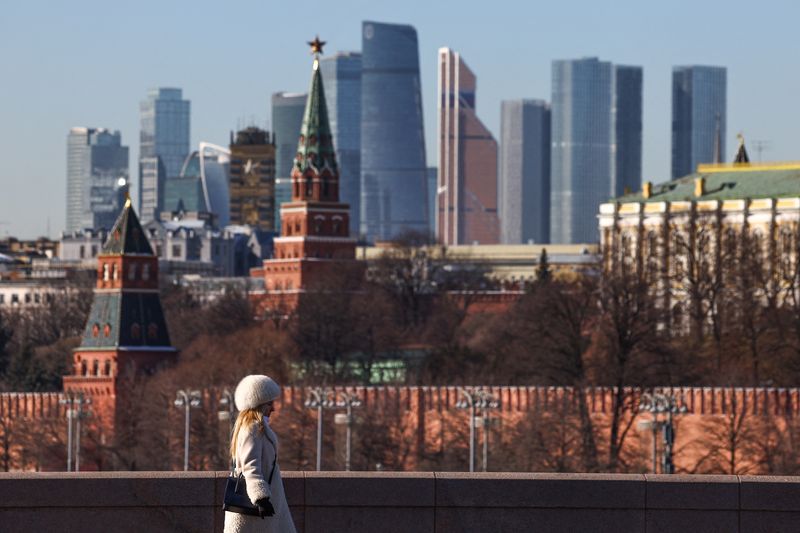
MOSCOW, May 12 (Reuters) – The Kremlin played down a government economic growth forecast downgrade on Tuesday and gave no indication that it plans to punish officials for failing to boost growth, saying the government had taken the necessary measures to ensure economic stability.
Deputy Prime Minister Alexander Novak unveiled some new macroeconomic forecasts in an interview with the Vedomosti business daily late on Monday, in which the government slashed its estimates for gross domestic product growth in 2026 to 0.4% from 1.3% and cut its estimate for growth in 2027 to 1.4% from 2.8%.
That came just weeks after President Vladimir Putin summoned his top economic officials in the Kremlin, scolding them for slow growth and telling them to devise new ways to support the economy. Having a growth rate above the International Monetary Fund’s global average estimate of 3.1% for 2026 is one of Russia’s national development goals.
Kremlin spokesman Dmitry Peskov told reporters Putin was closely involved in economic issues and Russia could “talk confidently” of macroeconomic stability despite volatility in global markets driven by the conflict in the Middle East. Another meeting with government officials on the economy was expected this week, he said.
“Thanks to the measures being implemented by our government, we can confidently speak about macroeconomic stability and promising plans to modestly but steadily increase economic growth rates year after year,” Peskov said.
Russia’s $3 trillion economy, hit by the war in Ukraine, Western sanctions and high interest rates, contracted by 0.3% in the first quarter, marking its first quarterly decline since early 2023 after tax hikes at the start of the year and deep discounts on Russian oil linked to Western sanctions.
According to forecasts investment will fall by 1.5% in 2026 while the rouble, which has defied analysts’ predictions for an imminent weakening for more than a year, is seen as being almost 12% stronger in 2026 than previously expected. The ministry also cut forecasts for industrial output, real wages and retail sales.
Novak was vague about the government’s plans to boost growth, underlining that domestic consumer demand will remain its main driver.
BUDGET CONSOLIDATION
In a surprise move, Novak said the ministry projected the oil price used for calculating budget revenue would remain at $59 per barrel in 2026. The projected oil price equals the so-called “cut-off” price, which determines what share of the budget’s oil revenue goes to the fiscal reserve National Wealth Fund.
The oil price is expected to stay at $50 per barrel for the next three years although many analysts had said Russia could be among the main beneficiaries of a rise in oil prices after U.S. and Israeli attacks on Iran. The conservative oil price forecast suggests the government wants to prevent its reserve fund from being depleted early.
Some analysts said the new forecasts are aimed at constraining state spending, which risks getting out of control after the budget deficit reached 2.5% of GDP in the first four months of the year, well above the full-year 1.6% target.
“It is possible that a more conservative forecast could become a factor for budget consolidation,” Raiffeisen analysts said.
Novak said unemployment, which remains at record lows and is seen as a major constraint on growth, is expected to stay between 2.3% and 2.4% of the workforce. Analysts took this as a sign the central bank will not be in a rush to lower its key interest rate from the current 14.5%.
“The combination of a lower economic growth forecast and simultaneously lower unemployment indicates expectations of maintaining rather tight monetary conditions in the Russian economy in the medium term. This, of course, does not inspire optimism,” Alfa Wealth analysts said.