 Front Desk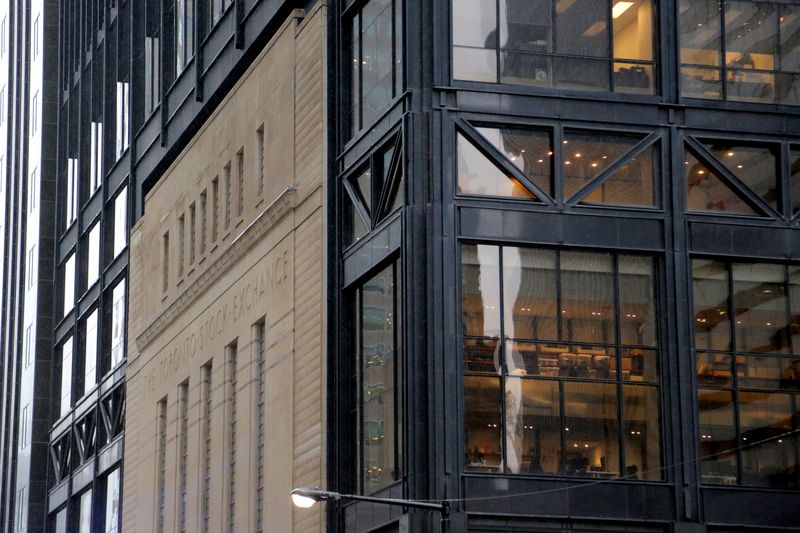
By 12:30 ET (17:30 GMT), the S&P/TSX 60 index was down 6.2 points or 0.3%. The Toronto Stock Exchange’s S&P/TSX composite index is down 145.9 points or 0.4%.
The Toronto Stock Exchange’s S&P/TSX composite index ticked up by 0.3% to 34,138.88 on Monday, notching its highest close since April 21, thanks to gains in oil and metal stocks.
U.S. stocks lower
U.S. stocks have also declined on Tuesday. At 12:33 ET, the Dow is down 0.3%, the S&P 500 has dropped 0.9%, and the Nasdaq has fallen 1.8%.
The focus on Tuesday was on consumer price data from the U.S.
Data from the Labor Department’s Bureau of Labor Statistics showed that the headline consumer price index (CPI) in April ticked up 0.6% M/M and 3.8% Y/Y, compared to consensus estimates of 0.6% and 3.7%. Core CPI, which excludes food and energy, rose 0.4% M/M and 2.8% Y/Y, versus estimates of 0.3% and 2.7%.
Analysts have also been on the lookout for any hints that the energy shock is contributing to higher prices in goods beyond gasoline.
U.S.-Iran impasse
The main averages on Wall Street ticked higher in the prior session. Stocks were boosted by continued strength in chipmaking names, which have been aided by enthusiasm around artificial intelligence that has remained resilient despite headwinds from prolonged geopolitical tensions.
In this articleXAU/USD-1.43%US500-0.90%EBAY+0.26%DX+0.45%GC-1.15%LCO+3.40%ESM26-0.86%CL+3.85%YMM26-0.37%NQM26-1.98%SXFc1-0.09%GME-2.18%GSPTSE-0.39%ARMK+9.31%HIMS-15.56%
“[E]quities seem to have moved on from trading each and every geopolitical headline,” said Michael Brown, Senior Research Strategist at Pepperstone in a note.
“Instead, a strong bullish narrative of robust earnings growth coupled with a return of AI-driven excitement has formed, and become the main driver of upside in risk assets.”
Against this backdrop, the benchmark S&P 500 is growing at its fastest year-on-year pace since the fourth quarter of 2021, and has notched a clutch of fresh record highs so far in 2026.
U.S. President Donald Trump told reporters on Monday that a ceasefire between Washington and Tehran was on “massive life support” after he rejected Iran’s response to an American peace proposal.
Trump dismissed the counteroffer, which was similar to plans previously floated by Iran, in strident terms, calling it “unacceptable” and later “a piece of garbage” that he did not even believe was worth reading fully.
At the same time, there were indications that brinkmanship was returning to the conflict. According to CNN, Trump, impatient with dithering negotiations, is now seriously mulling restarting major combat operations.
Some observers have suggested that Trump’s much-anticipated upcoming trip to China and meeting with Chinese President Xi Jinping could help crack the stalemate, adding that China, a major importer of Iranian crude, may act as a guarantor of any long-term peace agreement.
But with uncertainty looming over the crisis and, crucially, the Strait of Hormuz remaining all but shuttered to tanker traffic, oil prices climbed once again. Brent crude futures, the global oil benchmark, were last higher by 3.2% at $107.56 a barrel, while U.S. West Texas Intermediate crude futures gained 3.3% to $101.30 a barrel.
As they have been throughout much of the more than two-month old conflict, oil prices are well above pre-war levels, fueling worries over an inflationary spike that could dent global economic activity.
Gold drops
Gold prices, meanwhile, dropped. Higher oil prices have capped gains in bullion, as investors worry that a sustained rise in energy costs could fuel inflation and prompt the Federal Reserve to keep interest rates elevated for longer.
Elevated interest rates tend to reduce the appeal of non-yielding assets such as gold.
At the same time, the U.S. dollar has firmed, with traders viewing the greenback as a relative safe haven during the broader geopolitical uncertainty. The American economy’s role as a major energy exporter could also help insulate the country from a broader energy shock, some analysts have suggested, further denting gold. A stronger dollar can make the yellow metal more expensive for overseas buyers.
In individual stocks, GameStop shares slumped in premarket U.S. trading after eBay rejected the videogame retailer’s $56 billion takeover offer due to doubts over how the deal would be financed. Shares of eBay dipped as well.
Elsewhere, U.S. food and facilities manager Aramark posted better-than-anticipated fiscal second-quarter revenue, sending its shares higher.
Hims & Hers Health also tumbled after the telehealth company logged lower-than-expected first-quarter revenue and a surprise loss in the wake of changes in its weight-loss products.